
October 10, 2025
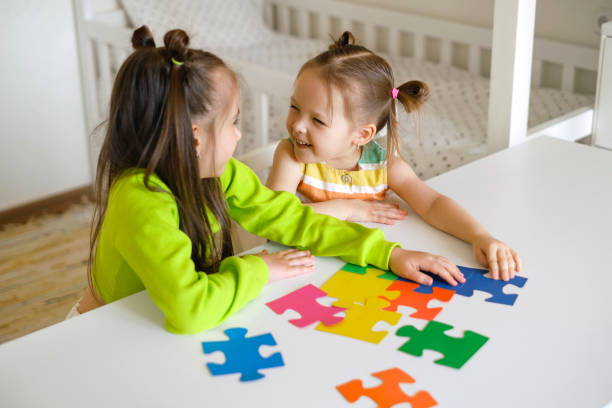
For children with autism spectrum disorder (ASD), developing meaningful peer relationships can be one of the most challenging yet critical aspects of their social development. Applied Behavior Analysis (ABA) therapy has emerged as an evidence-based intervention that significantly improves outcomes for many children with autism, including gains in social functioning. This comprehensive guide explores how ABA therapy enhances peer interaction and helps children with autism build lasting friendships.
Applied Behavior Analysis has been used to help children with autism and related developmental disorders since the 1960s. The therapy uses positive reinforcement as one of its main strategies—when a behavior is followed by something valued, a person is more likely to repeat that behavior.
More than 20 studies have established that intensive and long-term therapy using ABA principles improves outcomes for many children with autism, with “intensive” referring to programs that provide 25 to 40 hours a week of therapy for 1 to 3 years. These studies show gains in intellectual functioning, language development, daily living skills and social functioning.
Peer interaction plays a crucial role in the social development of children with autism, as engaging with peers provides opportunities for practicing social skills and reinforcing learning in real-world contexts, and when integrated into ABA therapy, peer interactions can facilitate meaningful relationships, reduce isolation, and enhance communication abilities.
Research has shown that children and adolescents with autism are capable of forming reciprocal friendships and have a strong desire for friends, with developing and maintaining friendships associated with improved quality of life, mental health, and academic achievement.
ABA therapy enhances social skills by employing structured, evidence-based strategies that focus on communication and social interactions, utilizing positive reinforcement to encourage appropriate social behaviors. The therapy breaks down complex social behaviors into manageable steps, making it easier for children to learn and practice essential interaction skills.
Peer-mediated interventions are designed to train typically developing peers to facilitate social interactions, supporting the inclusion of children with autism in mainstream settings and promoting naturalistic social learning opportunities. Research has shown that peer-mediated interventions can increase social motivation and minimize undesirable behavior patterns, with a hospital study revealing notable enhancements in social skills and communication abilities.
Natural Environment Training focuses on teaching skills in real-life situations, which enhances the applicability of learned behaviors. This approach allows children to practice peer interaction in authentic settings like playgrounds, classrooms, and community spaces, making the skills more transferable and sustainable.
ABA employs modeling, role-playing, visual aids, and positive reinforcement, where modeling allows children to observe and imitate appropriate social behaviors, and role-playing provides a safe environment where children can practice social interactions and recognize social cues.
Positive reinforcement is one of the main strategies used in ABA, where when a behavior is followed by something valued, a person is more likely to repeat that behavior, and over time this encourages positive behavior change. For peer interactions, this might include praise, rewards, or preferred activities when a child successfully engages with peers.
Group sessions in ABA therapy create an organized setting for peer interaction and collaborative play, with structured activities like role-playing scenarios helping children acquire the skills needed for successful interactions. These sessions provide repeated opportunities to practice turn-taking, sharing, and cooperative problem-solving.
Research supports the value of ABA interventions in improving social interactions among children with autism, with a significant study indicating that children receiving ABA therapy showed statistically significant improvement in target behaviors over a one-month period.
The applied behavior analysis program significantly improves the social, communicative, and daily life skills of children with autism spectrum disorder, with ABA interventions delivered through structured sessions effectively enhancing emotional and social development.
Long-term engagement in comprehensive ABA therapy has proven to positively influence intellectual capabilities, language acquisition, daily living skills, and social interactions, with studies indicating that children who undergo intensive ABA therapy often experience lasting benefits that persist after the program concludes.
Peer interaction programs yield long-term benefits such as enhanced independence and social integration in adulthood, with structured interventions enriching social functioning and fostering self-confidence.
Incorporating ABA therapy within educational settings is essential for the development of children with autism spectrum disorder, as it not only enhances interaction among peers but also builds an inclusive and supportive environment conducive to learning.
Family involvement is crucial, as parents can reinforce learned skills at home. Parents and caregivers should receive training to support their child’s social skill development across all environments, ensuring consistency and generalization of learned behaviors.
Good ABA programs are not “one size fits all,” with each program written to meet the needs of the individual learner, and the goal being to help each person work on skills that will help them become more independent and successful. Board-certified behavior analysts (BCBAs) design customized interventions based on comprehensive assessments of each child’s unique strengths and challenges.
Children participating in ABA-focused peer interaction programs typically demonstrate:
Research shows an increase in social interactions among autistic students and their peers, leading to improved communication and better relationships, with active engagement in structured play promoting lasting improvements that enable students to apply their skills beyond therapy environments.
ABA therapy represents a scientifically validated, comprehensive approach to improving peer interaction for children with autism. ABA is considered an evidence-based best practice treatment by the US Surgeon General and by the American Psychological Association, meaning that ABA has passed scientific tests of its usefulness, quality, and effectiveness.
By combining structured interventions with naturalistic learning opportunities, ABA therapy equips children with the essential skills they need to form lasting friendships, navigate complex social situations, and thrive in diverse peer environments. The investment in intensive, individualized ABA programming can yield profound, lasting improvements in a child’s social competence and overall quality of life.
For parents considering ABA therapy for their child, consulting with qualified BCBAs and exploring evidence-based programs can be the first step toward helping your child build the meaningful peer connections that are so vital to their development and happiness.