
October 16, 2025
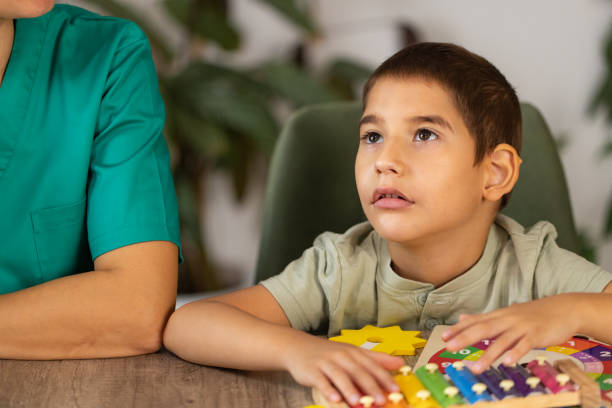
Eye contact and attention skills are fundamental building blocks for social communication and learning. For children with Autism Spectrum Disorder (ASD), developing these abilities can be particularly challenging. Applied Behavior Analysis (ABA) therapy has emerged as a powerful, evidence-based approach that systematically improves both eye contact and attention skills in individuals with autism. This comprehensive guide explores how ABA therapy transforms these critical developmental areas through scientifically-validated techniques and personalized interventions.
Eye contact serves as a nonverbal cue that plays a vital role in communication. It helps convey interest, attention, and engagement in conversations. For neurotypical individuals, maintaining eye contact during interactions is considered natural and expected behavior. However, children with autism often experience significant difficulties with this fundamental social skill.
Research has shown that deficits in eye contact have been a hallmark of autism since the condition’s initial description and are cited widely as a diagnostic feature. Studies indicate that infants later diagnosed with autism spectrum disorders exhibit mean decline in eye fixation within the first 2 to 6 months of life, a pattern not observed in infants who do not develop ASD.
Contrary to popular belief, recent research suggests that young children with autism don’t necessarily avoid eye contact on purpose. Eye-tracking measures demonstrate that young children with autism do not avoid eye contact intentionally; instead, they miss the significance of social information in others’ eyes. This understanding has profound implications for how we approach treatment and intervention strategies.
Attention skills are equally crucial for learning and social development. Children with autism often struggle with sustained attention, concentration, and the ability to shift focus appropriately. These challenges can significantly impact their academic performance, social interactions, and daily functioning.
ABA therapy is a scientifically validated approach that focuses on understanding and modifying behavior. Recognized as an evidence-based best practice treatment by the US Surgeon General and the American Psychological Association, ABA has been used since the 1960s to assist children with autism and related developmental disorders.
The fundamental principles of ABA include:
The research supporting ABA therapy’s effectiveness is extensive and compelling. Research has shown that ABA therapy has an over 89% success rate in treating autism spectrum disorder in children. This impressive statistic reflects decades of rigorous scientific study and real-world application.
A landmark study found that 90% of children make large gains through ABA therapy, and 47% of the children studied were “indistinguishable from their peers” after receiving intensive ABA therapy. These results demonstrate the transformative potential of properly implemented ABA interventions.
The demand for ABA services reflects its growing recognition as an effective treatment. According to the Behavior Analyst Certification Board, the demand for certified ABA therapists has increased by a staggering 5,852% from 2010 to 2021. This surge in demand reflects the growing recognition of the benefits of therapy in helping individuals with autism reach their full potential.
Comprehensive ABA-based interventions have demonstrated medium to large effects across multiple developmental domains. Compared to treatment as usual, minimal or no treatment, comprehensive ABA-based interventions showed medium effects for intellectual functioning (standardized mean difference SMD = 0.51) and adaptive behavior (SMD = 0.37).
Applied Behavior Analysis (ABA) therapy offers effective strategies to help children with ASD develop and improve their eye contact skills. Rather than forcing children to make eye contact, which can cause distress and anxiety, ABA uses gradual, positive approaches that respect the child’s comfort level while building this important skill.
The process typically involves several key components:
1. Identifying Underlying Factors
ABA therapists begin by assessing each child’s specific challenges with eye contact. This might include sensory sensitivities, anxiety, or simply not understanding the social significance of eye contact. Understanding the “why” behind the difficulty allows therapists to design more effective interventions.
2. Gradual Shaping
Studies using shaping procedures to teach sustained eye contact have shown that all three children in one research study acquired quick and sustained eye contact, which maintained after 1 month without the need for prompting. The shaping process involves:
3. Positive Reinforcement Strategies
Therapists use various techniques during ABA sessions, such as reinforcing naturally occurring instances of eye contact and modeling appropriate eye contact during social interactions. When a child makes eye contact, even briefly, they receive immediate positive feedback. This might include:
4. Naturalistic Teaching
ABA therapists incorporate eye contact practice into natural settings and activities, such as play, conversations, or mealtimes. This helps children generalize their skills to real-life situations. By embedding eye contact practice into enjoyable activities, children are more motivated to engage and learn.
ABA employs several evidence-based techniques specifically designed to improve eye contact:
Prompting and Fading
Therapists might use verbal prompts like “Look at me” or gentle physical cues like tapping near the eyes to encourage eye contact. Therapists demonstrate appropriate eye contact behavior and encourage children to imitate them. As the child becomes more proficient, these prompts are systematically reduced until the behavior occurs independently.
Visual Supports and Social Stories
Personalized stories or visuals can be used to explain the importance of eye contact and provide social cues. These tools help children understand the “why” behind making eye contact, making the skill more meaningful and purposeful.
Video Modeling
Watching videos of themselves or others making eye contact can be a helpful teaching tool. This technique allows children to observe and learn from models in a low-pressure environment, then practice the behaviors themselves.
Attention skills are critical for learning, social interaction, and daily functioning. ABA therapy addresses attention challenges through multiple, complementary approaches.
One of the core techniques of ABA therapy is positive reinforcement, which is utilized to enhance attention and focus. This approach involves rewarding desirable behaviors, such as maintaining attention on a specific task. By doing so, individuals are motivated to engage more effectively in their activities, thereby increasing their overall focus and attention span.
The reinforcement process is carefully structured:
Discrete Trial Training (DTT) is another effective strategy used within ABA therapy. DTT involves breaking down complex skills into smaller, manageable parts. Each part is taught through repeated trials, where prompts are provided as needed. Positive reinforcement is given after each correct response, helping individuals learn new skills efficiently.
For attention skills, DTT might involve:
Research Evidence for DTT Effectiveness
Research indicates that about 75% of children undergoing ABA therapy show improvements in attention and memory, vital for academic success. This impressive statistic demonstrates the power of systematic behavioral approaches in developing these foundational skills.
ABI modifies the learning environment to minimize distractions. This strategy helps children engage more effectively, creating a setting where maintaining focus is easier. Environmental modifications might include:
Research shows that ABA therapy effectively enhances language and communication skills, leading to improved attention, focus, and memory. As a result, these improvements often translate into better academic performance.
The multifaceted approach to attention development includes:
Joint attention represents a critical developmental milestone that combines elements of eye contact and shared focus. ABA (Applied Behavior Analysis) therapy is highly effective in helping children with autism develop essential social-communication skills like eye contact and joint attention. These skills involve sharing focus on objects, people, or events through gestures, eye contact, or vocalizations.
Eye contact and joint attention are fundamental social-communication skills essential for a child’s development. They serve as the foundation for meaningful social interactions, language acquisition, and understanding others’ perspectives.
Joint attention includes two primary components:
Activities are carefully integrated into therapy sessions to promote natural social interactions. Turn-taking games, shared reading, and interactive play with toys are used to teach children how to follow a caregiver’s gaze and share focus on objects. These activities are engaging and motivating, fitting well into daily routines. Consistent practice with reinforcement ensures that children gradually become more comfortable with eye contact and sharing attention.
Prompting and Modeling
Prompting involves guiding the child to perform desired behaviors, such as encouraging eye contact with physical cues or gestures. Modeling demonstrates behaviors like pointing or maintaining eye contact, which children are encouraged to imitate.
Gradual Skill Development
Building eye contact gradually is essential, especially since bright, direct staring can be overwhelming for some children on the autism spectrum. Starting with small, fleeting glances—like encouraging the child to look at your face for a second—can set the foundation. Over time, as they become more comfortable, the duration of eye contact can be increased.
JASPER (Joint Attention Symbolic Play Engagement Regulation) is a treatment approach based on a combination of developmental and behavioral principles. This intervention model targets the foundations of social-communication (joint attention, imitation, play), uses naturalistic strategies to increase the rate and complexity of social-communication, and includes parents and teachers as implementers of the intervention to promote generalization across settings and activities.
Studies show that when joint attention skills are modeled and taught directly, children with autism use more joint attention. This leads to increased engagement and learning.
Research shows that ABA therapy effectively enhances language and communication skills, leading to improved attention, focus, and memory. As a result, these improvements often translate into better academic performance. Key strategies utilized in ABA, such as positive reinforcement, play a crucial role in motivating children to engage with their studies, thereby enhancing productivity in academic settings.
The academic improvements span multiple areas:
In addition to academic enhancements, ABA therapy significantly improves social skills development among children with autism. The therapy assists in teaching key social interaction skills such as sharing, turn-taking, and effective communication strategies.
The connection between eye contact, attention, and social success is clear. When children can:
…they experience greater social acceptance, more meaningful friendships, and increased confidence in social settings.
Research has shown that ABA therapy can have significant benefits for individuals with autism spectrum disorder. ABA-based interventions have been found to positively impact lifelong development, with notable improvements in intellectual functioning, language development, acquisition of daily living skills, and social functioning. Comprehensive ABA-based interventions have demonstrated medium to large effects on the lifelong development of children with ASD.
The cornerstone of ABA, positive reinforcement involves providing rewards immediately following desired behaviors. For eye contact and attention, this might mean:
A structured teaching method that breaks skills into small, teachable components. Each “trial” includes:
Learning opportunities embedded in natural, everyday activities. This approach:
Providing support to help children succeed, then systematically reducing that support:
Breaking complex skills into sequential steps:
The success of ABA therapy is significantly enhanced when families are actively involved. The involvement of parents is vital in ABA therapy. Parents are guided to reinforce communication skills at home, ensuring that learning continues outside of therapy sessions. This collaborative approach enables children to practice their skills and enhances their overall confidence in social interactions.
Home-Based Strategies
Families can support eye contact and attention development by:
Consistency Across Settings
For skills to truly generalize, consistency is crucial:
Forcing or pressuring children with HFA to make eye contact is not recommended, as it may cause distress and hinder their progress. Forcing eye contact can lead to discomfort and anxiety, making it counterproductive to the goal of improving eye contact skills.
Modern ABA approaches emphasize:
A personalized approach in ABA therapy involves creating tailored interventions that reflect the unique strengths, needs, and preferences of each individual. What works for one child may need adjustment for another, and effective ABA programs continuously assess and adapt to each learner’s progress.
The field of ABA continues to evolve with ongoing research and innovation. Current areas of focus include:
Additionally, the integration of mindfulness practices into ABA may emerge as a prominent trend, helping children with ASD develop self-regulation skills that improve focus in various settings. Innovative techniques are continually being introduced to refine ABA therapy.
ABA therapy represents one of the most effective, scientifically validated approaches for improving eye contact and attention skills in children with autism. Through systematic, individualized interventions grounded in the principles of behavior analysis, children can develop these foundational skills that open doors to enhanced communication, learning, and social connection.
The impressive statistics speak for themselves: with over 89% success rates, significant improvements in 90% of children receiving intensive intervention, and documented gains across intellectual, adaptive, and social domains, ABA therapy has proven its value time and again.
By combining evidence-based techniques such as positive reinforcement, discrete trial training, naturalistic teaching, and systematic prompting with a deep respect for each child’s individual needs and preferences, ABA practitioners help children with autism reach their full potential. The skills gained—making meaningful eye contact, sustaining attention, and sharing focus with others—form the building blocks for successful social relationships, academic achievement, and independent living.
For families navigating an autism diagnosis, ABA therapy offers hope, practical strategies, and a proven pathway to meaningful progress. When implemented with fidelity, individualized to the learner, and supported across all environments, ABA therapy truly transforms lives.