
October 10, 2025
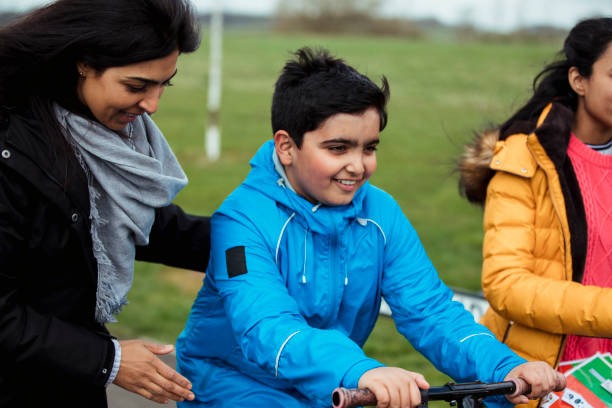
Adapting to new environments can be challenging for children with autism spectrum disorder (ASD). Whether it’s transitioning to a new classroom, visiting unfamiliar places, or adjusting to changes in routine, these situations often trigger anxiety and behavioral difficulties. Applied Behavior Analysis (ABA) therapy offers evidence-based strategies that help children develop the skills they need to navigate new settings with confidence and independence.
Applied Behavior Analysis involves many techniques for understanding and changing behavior, and ABA is a flexible treatment that can be adapted to meet the needs of each unique person and provided in many different locations – at home, at school, and in the community. This flexibility makes ABA particularly effective for teaching children how to generalize skills across different environments.
ABA therapy plays a crucial role in helping autistic children adapt to new environments by teaching them essential skills and promoting positive behaviors. The therapy focuses on enhancing communication, social interaction, and independent living skills that are transferable to various settings.
Introducing new environments in ABA therapy can be effectively accomplished through Natural Environment Teaching (NET), an approach that centers around teaching skills in the child’s familiar surroundings, enhancing the likelihood of skill generalization. Rather than only practicing skills in a clinical setting, NET involves teaching children in the actual environments where they’ll use these skills.
NET addresses the issue of real-life application by teaching new skills and behaviors in the environments where they will be used most, allowing individuals to learn skills in a more meaningful and relevant way and increasing the chances that they will use skills consistently and correctly in real-life situations.
ABA therapy provides significant benefits for children with autism in adapting to changes in routines or environments by creating a structured and predictable environment, utilizing clear visual schedules so children gain a better understanding of upcoming activities, which significantly decreases anxiety during transitions.
Visual supports include:
Gradual exposure is a key strategy in ABA therapy, where introducing new activities or environments gradually helps reduce anxiety by starting with brief interactions and slowly extending the duration. This systematic desensitization allows children to build tolerance and comfort at their own pace.
Additional transition strategies include:
Generalization in ABA therapy refers to the ability to apply a learned skill or behavior across different situations, settings, and people, allowing children to effectively use the skills acquired in therapy in their everyday lives. This is perhaps one of the most critical components of successful environmental adaptation.
Generalization is a cornerstone of Applied Behavior Analysis (ABA) therapy, particularly for children with autism, as it involves the ability to transfer learned skills across various environments and contexts, ensuring that acquired behaviors remain useful and adaptable in real-world scenarios, far beyond the controlled settings of therapy sessions.
Positive reinforcement plays a crucial role in fostering desirable behaviors during transitions. When children receive praise or rewards for successfully completing a transition, it encourages them to repeat those behaviors, helping them associate transitions not just with anxiety but with positive experiences, promoting their overall confidence.
ABA is considered an evidence-based best practice treatment by the US Surgeon General and by the American Psychological Association, with “evidence based” meaning that ABA has passed scientific tests of its usefulness, quality, and effectiveness.
More than 20 studies have established that intensive and long-term therapy using ABA principles improves outcomes for many children with autism, with “intensive” and “long term” referring to programs that provide 25 to 40 hours a week of therapy for 1 to 3 years, showing gains in intellectual functioning, language development, daily living skills and social functioning.
At the early intervention stage, children’s brains are exceptionally adaptable due to neuroplasticity, allowing ABA therapy to effectively enhance their development of essential skills in crucial areas of development—such as communication, social skills, and play—that benefit significantly from structured ABA guidance, with intensive early interventions often enabling many children to bridge the gap with their peers regarding intellectual and educational functioning.
ABA therapy can be implemented in multiple environments to maximize skill transfer:
Home Environment:
School Environment:
Community Settings:
Children engaging in ABA therapy often face significant hurdles in transferring learned skills to new settings, with studies indicating that nearly half of children with autism struggle to generalize behaviors taught in discrete trial sessions to real-world environments.
To address these challenges, ABA therapists:
Parent engagement enhances the effect of early intervention, as they can provide stability during critical periods of development, enabling their child to adapt more easily to routine changes and new environments, with collaboration between parents and therapists creating a strong support network for children that facilitates smooth transitions by ensuring that strategies are consistently applied across various settings.
ABA therapy offers a comprehensive, scientifically validated approach to helping children with autism adapt to new environments. Through strategies like Natural Environment Teaching, visual supports, gradual exposure, skill generalization, and positive reinforcement, children learn not just to tolerate new settings but to thrive in them.
The key to success lies in the individualized nature of ABA programs, the consistency of implementation across settings, and the collaborative effort between therapists, parents, educators, and the children themselves. With proper support and evidence-based intervention, children can develop the flexibility, confidence, and skills they need to navigate an ever-changing world.